
Great 1:1s aren't status updates. They're people accelerators.
Effective one-on-one meetings are not about reporting tasks or micromanaging work. They exist to build clarity, trust, and human progress.
William Zimmermann
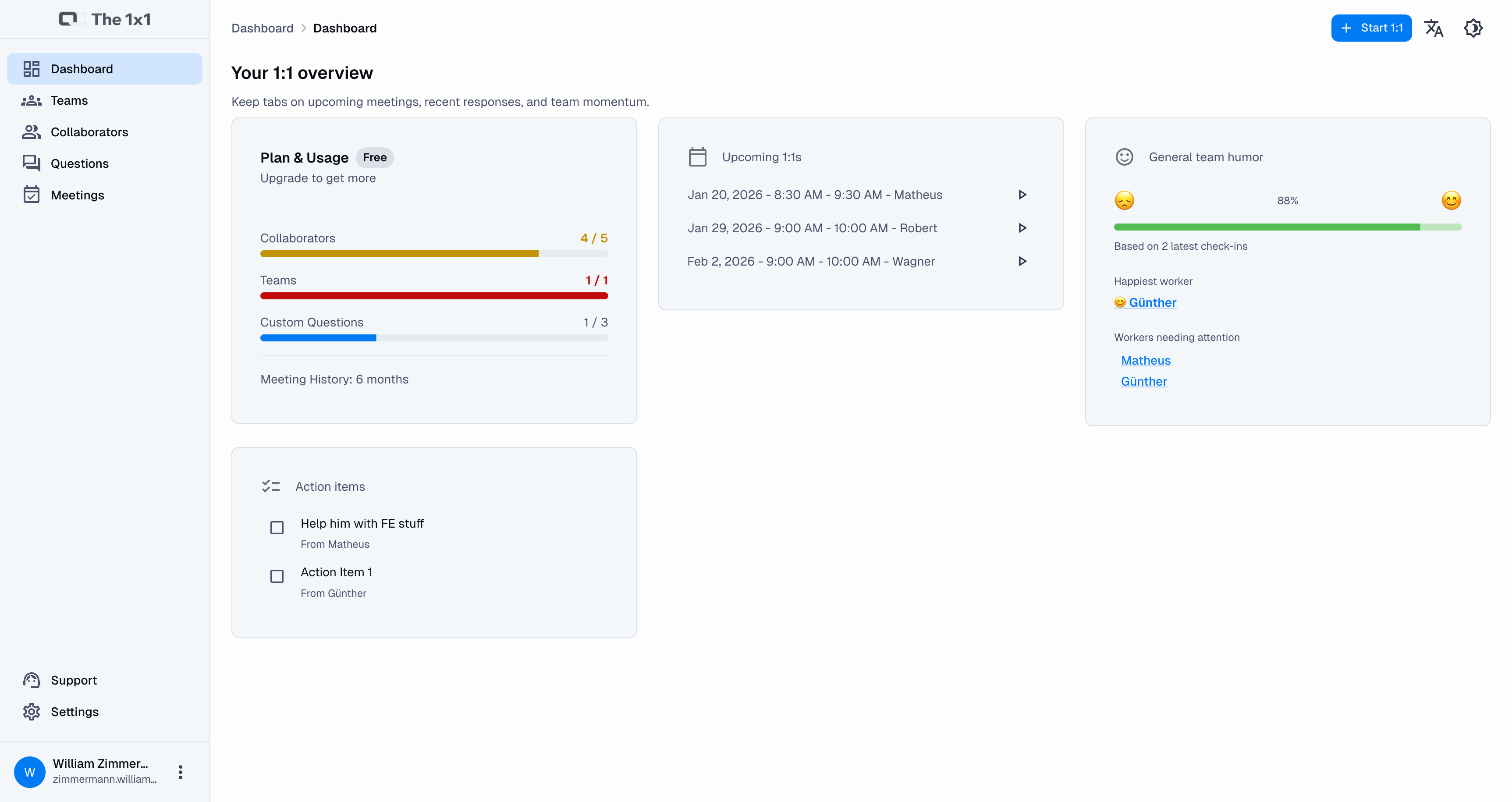
A podcast episode from Harvard Business Review makes a crucial point: effective one-on-one meetings are not about reporting tasks or micromanaging work. They exist to build clarity, trust, and human progress.
According to HBR, strong 1:1s share a few fundamentals:
- They happen consistently (not "when things slow down")
- They provide psychological safety
- They center on the employee, not the manager
- They build on past conversations instead of restarting every time
On paper, this sounds obvious. In reality, leaders forget. Teams grow. Notes scatter. Context disappears.
That's exactly the gap The 1x1 is designed to close.
How The 1x1 helps leaders run truly effective 1:1 meetings
Structured conversation history Every meeting builds on the last one. No more relying on memory or fragmented notes.
Mood and perception tracking over time Because performance isn't just output — it's how people are doing along the way.
Visible progress, not gut feeling Growth becomes something you can observe, not just assume.
Lower cognitive load for managers Leaders can focus on listening and coaching, not remembering everything afterward.
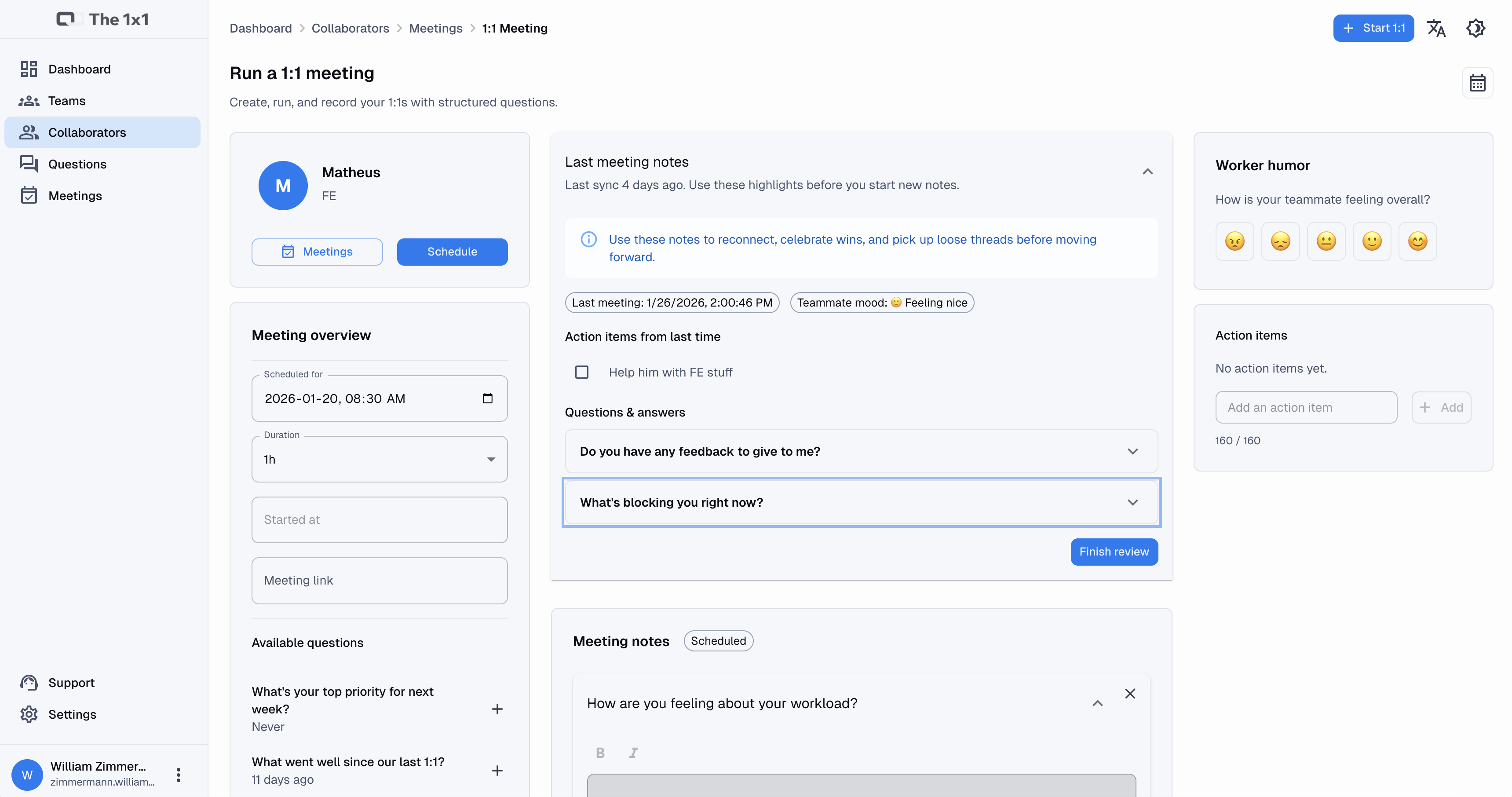
The HBR perspective
HBR puts it plainly:
One-on-one meetings are the most powerful people-development tool a manager has.
My take: most leadership failures aren't about bad intentions — they're about missing systems. Good conversations need memory, continuity, and structure. Human brains don't scale that well on their own.
The 1x1 doesn't replace the conversation. It makes sure the conversation still matters after the meeting ends.
Source
Harvard Business Review Podcast — Supercharge Your One-on-One Meetings (January 2024)
Remember your people. Not just your meetings.
Related Posts
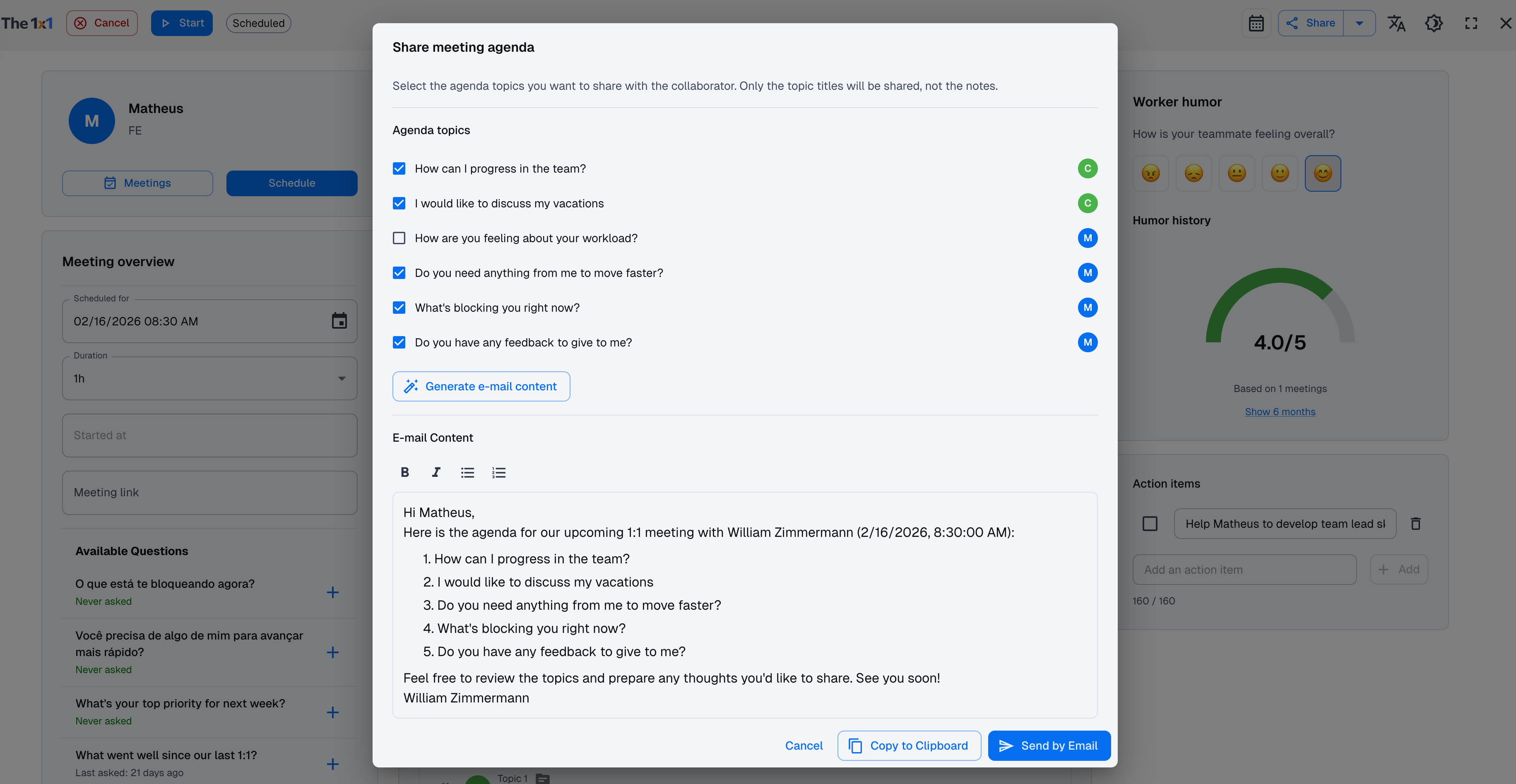
Sharing 1:1 meeting agendas and notes: best practices for leaders who want clarity, focus, and continuous growth
Learn why sharing the 1:1 agenda before the meeting and the notes after it creates alignment, accountability, and better follow-up.

What Is a 1:1 Meeting?
Understand why the 1:1 is the most important conversation between a leader and a teammate — and how to make it work.
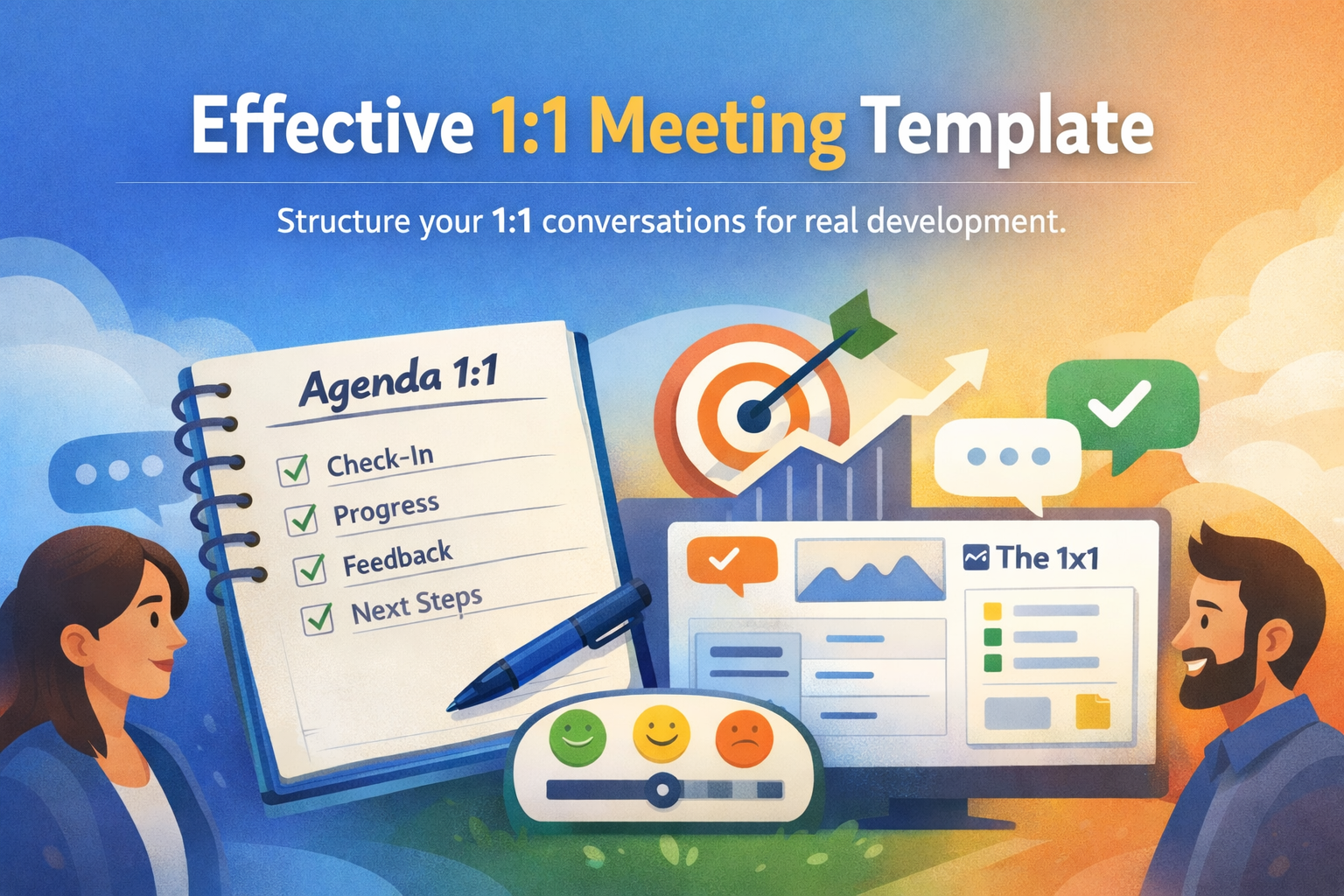
Effective 1:1 Meeting Template
Learn how to structure 1:1s that develop people through clarity, continuous feedback, and practical actions.