
Qu’est-ce qu’une réunion 1:1 ?
Comprenez pourquoi la réunion 1:1 est la conversation la plus importante entre un manager et un collaborateur — et comment la rendre efficace.
William Zimmermann

Une réunion 1:1 (one-on-one) est une conversation régulière, structurée et individuelle entre un manager et un collaborateur. Contrairement aux réunions de statut ou aux syncs d’équipe, elle existe pour parler de la personne, pas seulement du travail. C’est un espace sûr pour l’écoute, le feedback, le développement et le suivi continu.
En termes simples : c’est le moment où le manager s’arrête et dit, en pratique, « tu comptes ».
Du point de vue du management moderne, la réunion 1:1 est l’un des outils les plus efficaces pour améliorer la performance, l’engagement et la rétention. Ce n’est pas seulement une opinion : des recherches récurrentes en RH et en management (Gallup, Harvard Business Review et les pratiques People Ops largement adoptées) montrent que les collaborateurs qui reçoivent une attention régulière et un feedback clair ont tendance à mieux performer et à rester plus longtemps.
À quoi sert une réunion 1:1 ?
La réunion 1:1 crée une continuité humaine au sein de l’organisation. Les projets changent, les priorités aussi, mais les personnes ne fonctionnent pas bien dans l’improvisation permanente.
En pratique, elle aide à :
- Identifier les problèmes avant qu’ils ne deviennent des crises
- Donner et recevoir du feedback de manière structurée
- Suivre l’évolution technique et comportementale
- Aligner les attentes à court et moyen terme
- Construire la confiance entre manager et collaborateur
Un détail important : la réunion 1:1 n’est pas une réunion de pression. Si elle devient seulement une checklist de tâches en retard, quelque chose ne va pas.
À quelle fréquence faire une réunion 1:1 ?
Il n’existe pas de chiffre magique, mais les bonnes pratiques indiquent quelques schémas courants :
- Hebdomadaire : petites équipes, onboarding, périodes de changement
- Toutes les deux semaines : la plupart des équipes stables
- Mensuelle : uniquement pour des rôles très seniors ou des contextes spécifiques
Plus important que la fréquence : la régularité. Annuler une réunion 1:1 de façon répétée envoie un message silencieux mais puissant : « ce n’est pas une priorité ».
Que faut-il aborder dans une réunion 1:1 ?
Une bonne réunion 1:1 tourne généralement autour de quatre axes :
- Personne Comment se sent le collaborateur ? Motivation, charge émotionnelle, défis invisibles.
- Travail Ce qui fonctionne, ce qui ne fonctionne pas, les obstacles réels (pas seulement ceux visibles dans Jira).
- Feedback Dans les deux sens. Le manager donne du feedback, mais en reçoit aussi.
- Futur Développement, apprentissage, prochaines étapes, attentes.
Une erreur courante est d’improviser à chaque fois. Des questions récurrentes permettent de comparer dans le temps et de repérer l’évolution (ou la stagnation).
La réunion 1:1 est-elle trop “soft” ?
Cette question revient souvent, surtout dans les environnements techniques ou fortement orientés résultats.
Voici un point presque philosophique : ignorer le facteur humain ne rend pas le management plus objectif — seulement plus aveugle.
Les équipes n’échouent pas seulement par manque de compétence technique, mais à cause de bruit de communication, de désalignement, de frustrations accumulées et d’attentes non dites. La réunion 1:1 est précisément l’outil qui rend l’invisible visible.
Quelles sont les erreurs les plus courantes en réunion 1:1 ?
Quelques classiques :
- Ne rien noter et compter sur la mémoire
- Parler plus qu’écouter
- Transformer la réunion en rapport de statut
- Ne pas suivre les actions convenues
- Traiter toutes les réunions de la même manière, en ignorant le contexte
Ces erreurs ne viennent pas d’une mauvaise intention, mais d’un manque de méthode.
Comment mieux structurer vos réunions 1:1
C’est ici que les outils font la différence.
Les tableurs fonctionnent… jusqu’à un certain point. Les notes fonctionnent… jusqu’à ce qu’elles se perdent. Le vrai défi, c’est de garder l’historique, la cohérence et la visibilité des progrès dans le temps, surtout quand vous managez plusieurs personnes.
Des outils comme The 1x1 existent exactement pour cela : aider les managers à consigner les réunions, suivre l’évolution, définir des actions et garder une vision claire de la relation avec chaque collaborateur — sans lourdeur ni bureaucratie.
L’idée n’est pas de remplacer la conversation humaine, mais de s’assurer qu’elle ne se perde pas.
Conclusion
Les réunions 1:1 ne sont pas une mode corporate ni un luxe réservé aux grandes entreprises. Elles sont une réponse pratique à une réalité simple : les personnes travaillent mieux lorsqu’elles sont écoutées, accompagnées et prises au sérieux.
Le management ne concerne pas seulement les processus. Il concerne les personnes dans les processus.
Et la réunion 1:1 est l’endroit précis où ces deux dimensions se rencontrent.
Lectures associées
Articles Connexes
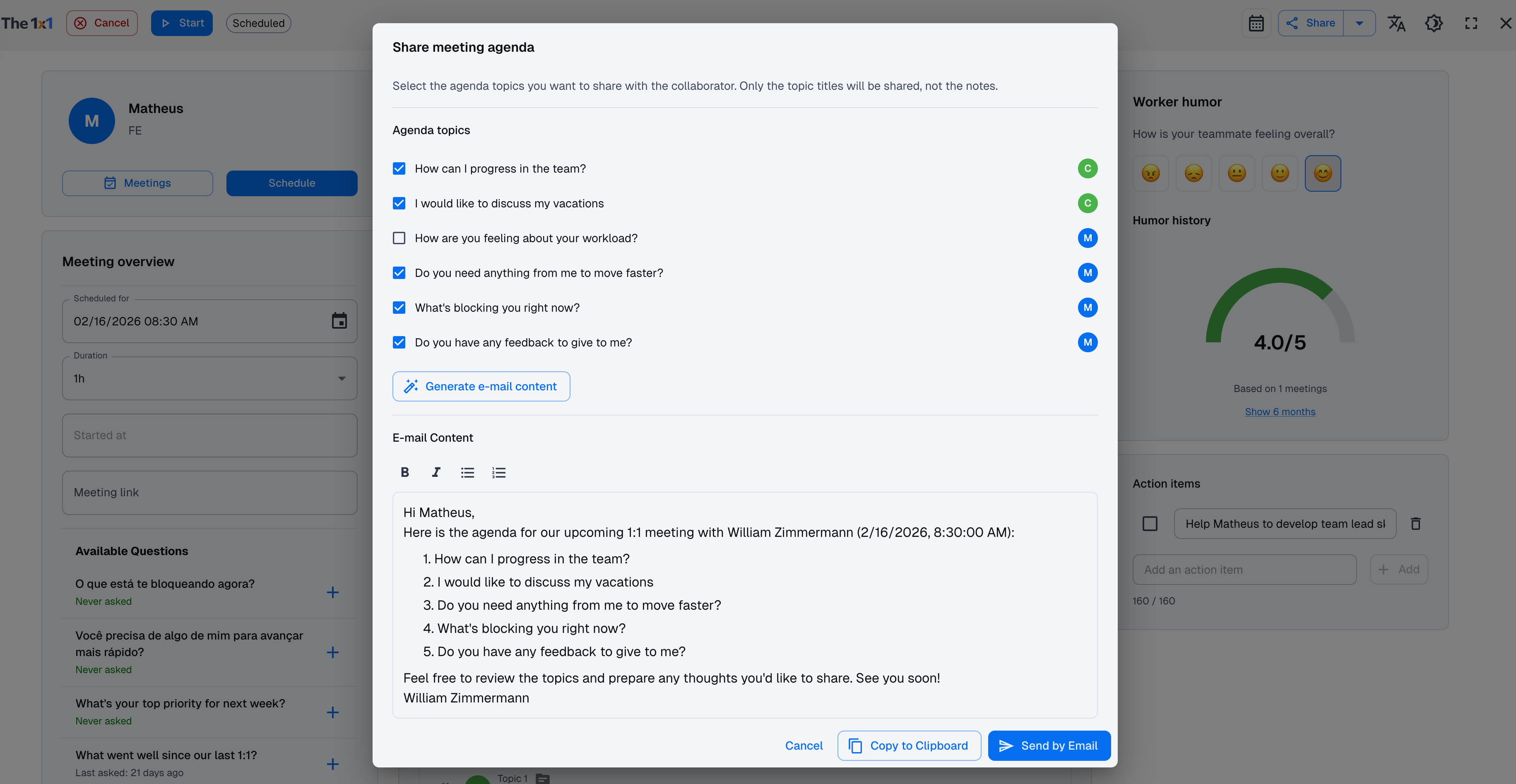
Partager l’agenda et les notes des réunions 1:1 : bonnes pratiques pour les leaders qui veulent clarté, focus et croissance continue
Découvrez pourquoi partager l’agenda avant la 1:1 et les notes après crée de l’alignement, de l’engagement et un meilleur suivi.
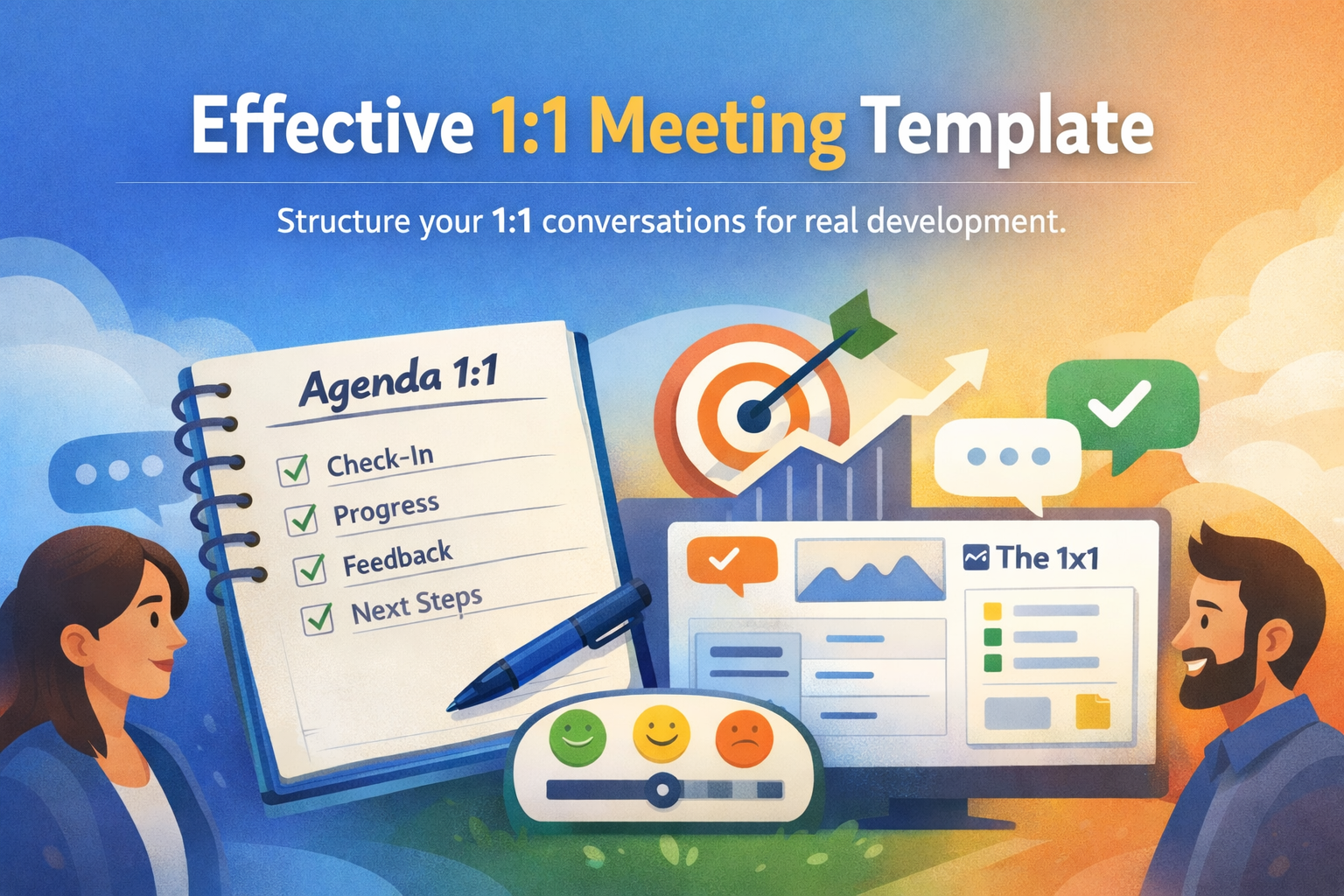
Modèle de réunion 1:1 efficace
Apprenez à structurer des 1:1 qui développent les personnes grâce à la clarté, au feedback continu et à des actions concrètes.

Janvier 2026 : les fonctionnalités du The 1x1 (v. 1.6.0)
Découvrez toutes les fonctionnalités du The 1x1 et comprenez comment l'outil aide les dirigeants à créer des réunions 1:1 plus humaines, cohérentes et efficaces.